

How to Improve Team Communication in Multi-Location Businesses
When the store in Malmö has the new routine but Stockholm doesn’t, or the night shift never sees what the day shift decided, you don’t have a people problem. You have a where we talk problem. Here’s how to improve team communication when people are spread across sites, shifts, or regions—without adding another inbox.
For teams on the floor and in the field, a mobile app for deskless workers can put chat, tasks, and updates in one place.
What Actually Breaks Down (And Why It’s Not “More Meetings”)
In multi-location setups, communication fails in a few repeat ways. Updates live in someone’s head or in an email thread that half the team never see. Handovers between shifts or sites are ad hoc—“I told Anna”—so the next person doesn’t know what’s agreed. Important stuff ends up in different tools: one channel for daily ops, another for incidents, another for procedures. The result isn’t laziness; it’s that there’s no single place that’s the place to look.
Adding more meetings rarely fixes it. What does: one shared space for the things that need to be consistent, and clear rules for who says what and when.
One Place for the Stuff That Has to Be Consistent
Improving team communication starts with reducing the number of places information lives. Pick one main channel for operational updates: shift handovers, policy changes, who’s responsible for what. That might be a team channel in an app, a pinned thread, or a short daily brief—but it has to be the same for everyone, and easy to reach from a phone. When “where do I check?” has one answer, fewer things fall through the cracks.
Who Answers What, and When
Vague “we should communicate more” doesn’t work. Define the minimum: response-time expectations for urgent vs non-urgent, who owns which topics (safety, rota, quality), and how often you share updates (e.g. end-of-shift summary, weekly roundup). Keep it short. The goal is that anyone, at any site, knows where to ask and what to expect.
A Short Checklist That Actually Helps
- One operational channel – Daily updates, handovers, and must-reads live here. No “it was in an email from Tuesday.”
- Same tool on the floor – If people work from a phone or tablet, the main channel has to work there. No “check the intranet when you’re back at a desk.”
- Link communication to tasks – When a task or checklist exists, the conversation around it should sit next to it. Fewer copy-pastes, fewer “which thread was that?”
- Review once a quarter – What’s working? Where do things still get lost? Adjust the channel or the rhythm; don’t just add more meetings.
- Document the rules – One short page: where we post what, who responds to what, and how often. Onboard new sites and new people to that.
How Todolo Fits
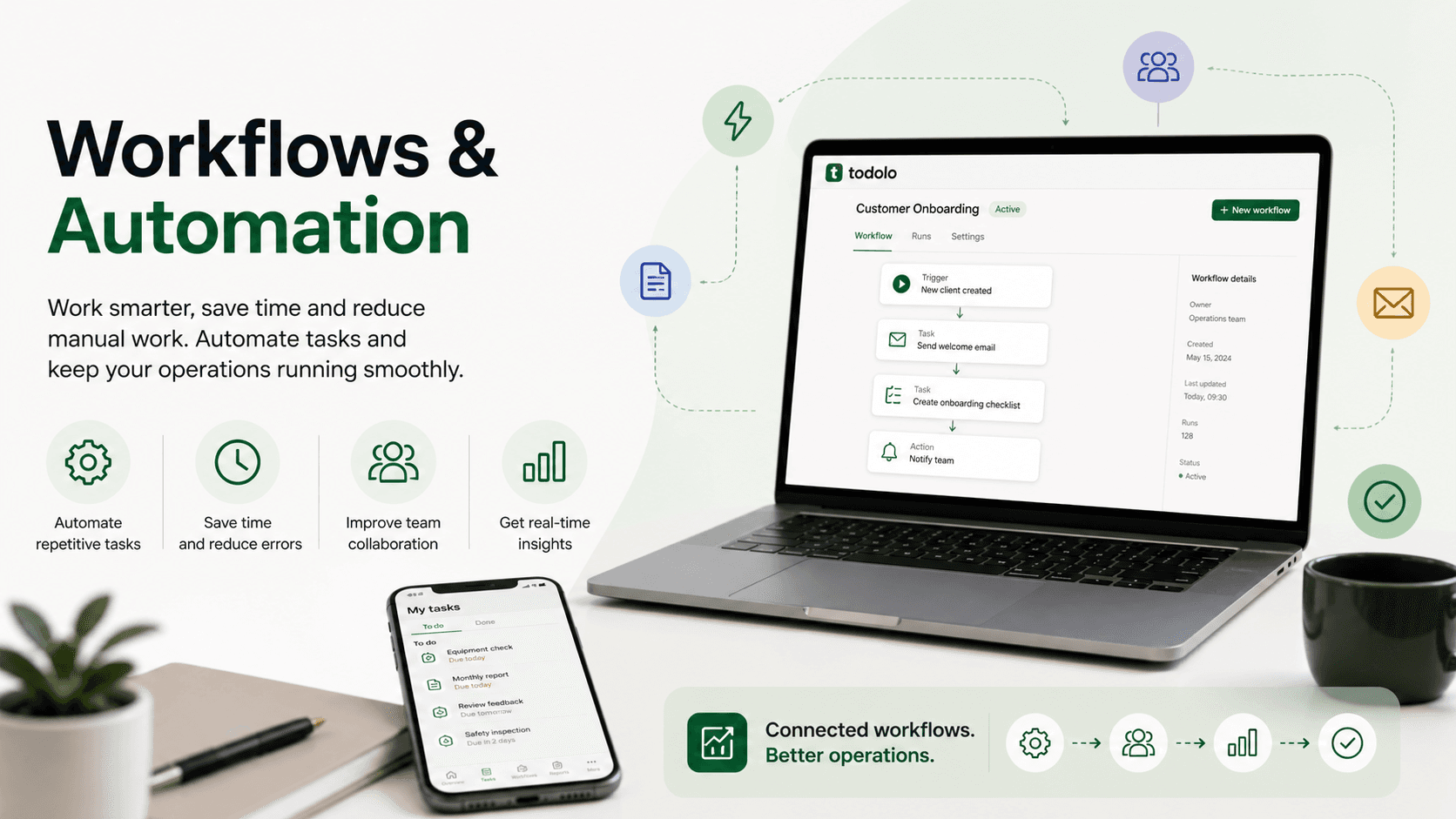
Todolo keeps team channels, task-related chat, and updates in the same app as checklists and operations. So the conversation about a routine lives next to the routine—and everyone, across locations, can see it. That’s how you improve team communication without another inbox: one place, one rhythm, clear ownership.