

How to Write Effective SOPs in 2026 (Free Template + Examples)
Learn how to create effective SOPs with a free template, real examples, and a step-by-step guide for modern teams.
What Is an SOP? (Meaning Explained)
An SOP (Standard Operating Procedure) is a documented, step-by-step set of instructions for how to carry out a specific task or process so the result is consistent, safe, and compliant.
In practice, SOPs answer one simple question: “How do we do this here?” When that knowledge is written down in a clear way, teams can train faster, reduce mistakes, and avoid relying on memory or informal shortcuts.
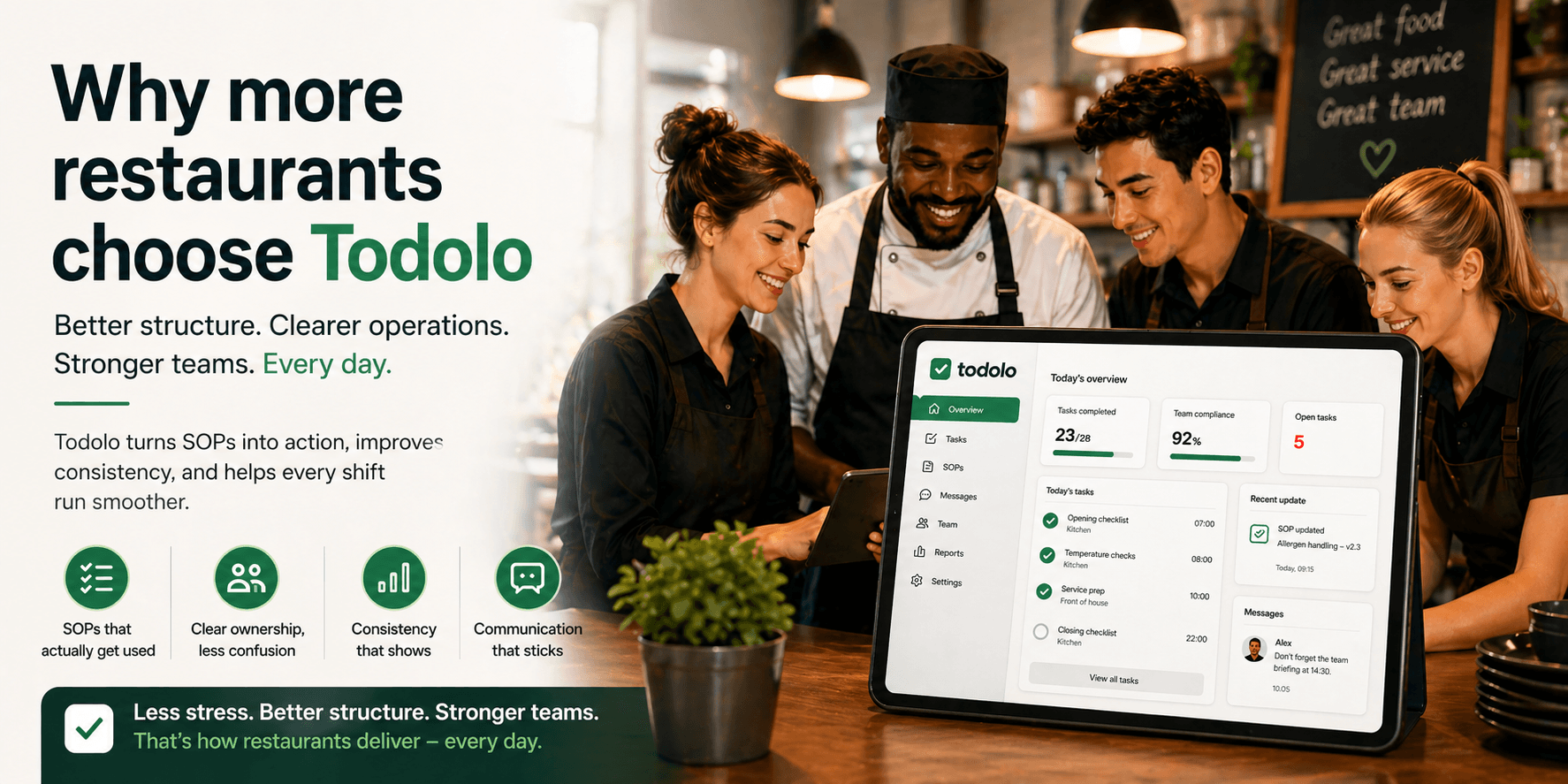
If you run a restaurant and want a practical example of restaurant SOPs that actually get used, read: why more restaurants are switching to Todolo.
SOPs your team actually uses
In 20 minutes, we’ll show you how to build, follow, and improve SOPs, without the complexity.
Free SOP Template (With Example)
To help you create standard operating procedures faster, here’s a free SOP template you can use for almost any process in your business.
It’s intentionally simple and practical, so your team can follow it in real day-to-day work.
You can use it for:
- Operations and internal workflows
- Employee onboarding
- Customer support processes
- Compliance and quality control
SOP Template
Use this structure when creating your SOPs:
Document title: [Name of procedure]
Document ID: SOP-XXX-001
Version: 1.0
Effective date: [Date]
Owner: [Role or name]
1. Purpose
[One or two sentences: why this procedure exists and what it achieves.]
2. Scope
[Where and when it applies; which roles, sites, or products.]
3. Definitions
[Any terms or abbreviations used in the procedure.]
4. Responsibilities
- Performer: [Who does the steps.]
- Reviewer/Approver: [Who checks or approves.]
5. Prerequisites
- Training: [Required training.]
- Equipment/Materials: [List.]
- Other: [Conditions that must be met.]
6. Procedure
| Step | Action | Notes / Warnings | | ---- | ------ | ---------------- | | 1 | [First action.] | [If any.] | | 2 | [Second action.] | [If any.] | | 3 | [Continue...] | |
7. Deviations and corrective action
[What to do if a step cannot be followed or something goes wrong. Who to notify.]
8. References
[Policies, regulations, or other SOPs.]
9. Revision history
| Version | Date | Author | Summary of changes |
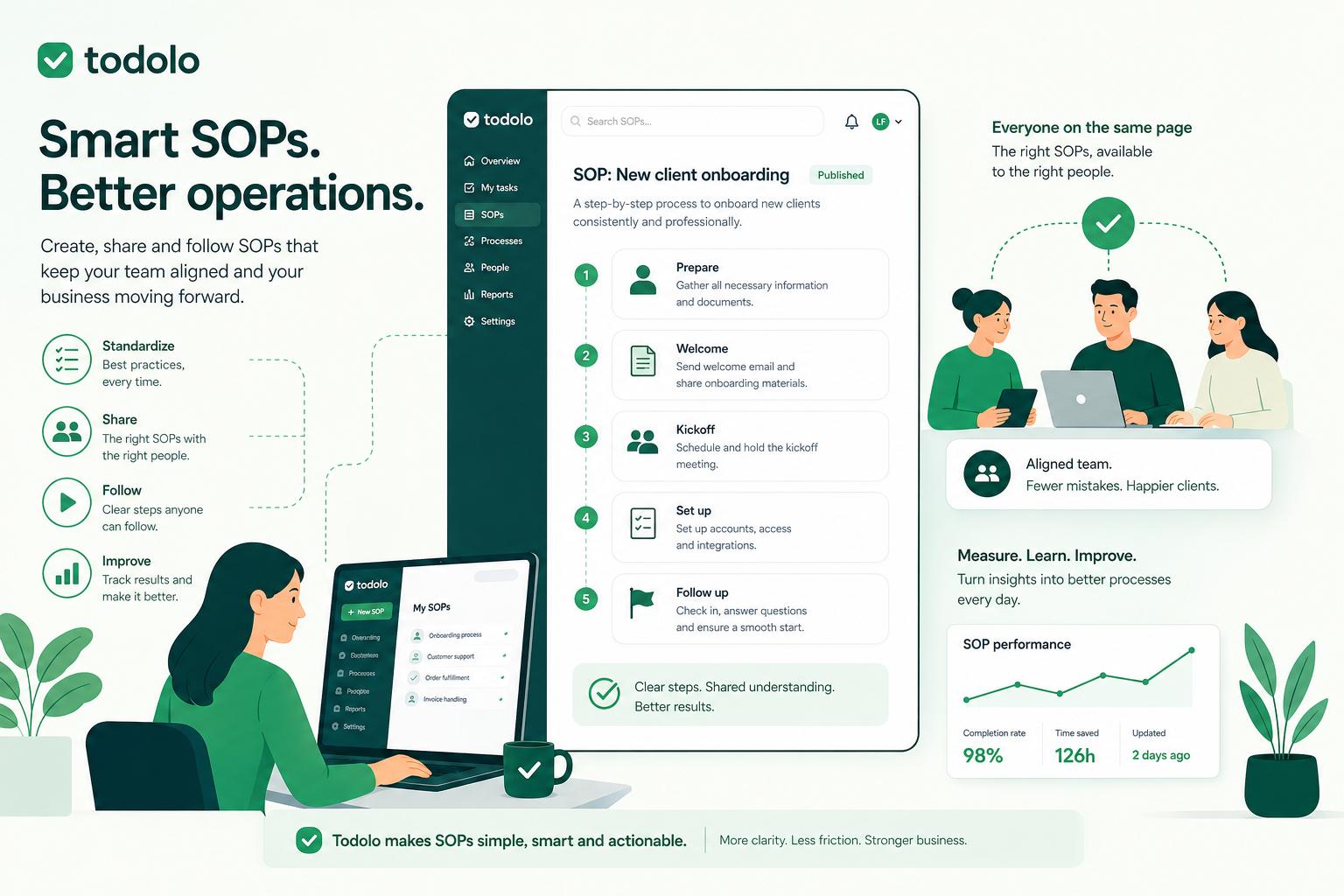
Use Todolo to Set Up and Run SOPs
If you want SOPs to be followed consistently, they need to be easy to access and easy to complete during a busy day.
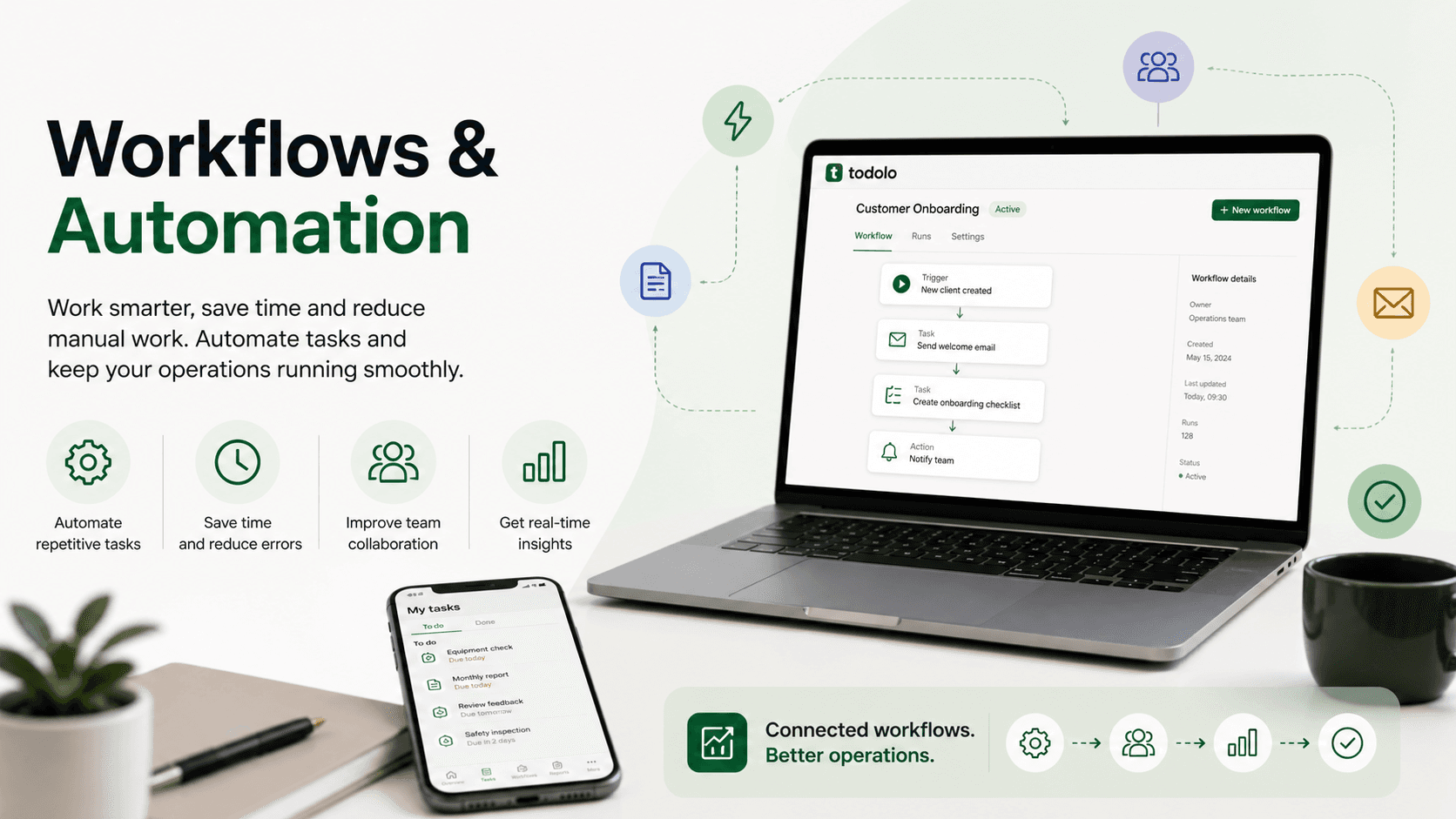
With Todolo you can keep SOPs in one place, control versions, and turn key steps into checklists and recurring routines your team actually completes.
SOP Example (Filled In)
Below is the same template, filled in. Copy the structure first, then adjust the content to match your process and requirements.
Document title: Daily fridge and freezer temperature checks
Document ID: SOP-OPS-012
Version: 1.2
Effective date: 2026-01-15
Owner: Site Manager
1. Purpose
Ensure fridge and freezer temperatures are checked and logged daily so food is stored safely and deviations are caught early.
2. Scope
Applies to all refrigeration and freezer units at the site. Completed at opening every day, and repeated after maintenance, power outages, or when a unit is suspected to be faulty.
3. Definitions
- Limit (fridge): 0 to +4°C
- Limit (freezer): -18°C or colder
- Deviation: A measured value outside the defined limits
4. Responsibilities
- Performer: Shift Lead (or assigned opener)
- Reviewer/Approver: Site Manager (weekly review of logs and follow-up on deviations)
5. Prerequisites
- Training: Basic food hygiene and deviation handling
- Equipment/Materials: Access to unit displays, calibrated probe thermometer when needed, temperature log (digital or paper)
- Other: Keep unit doors closed for 10 minutes before checking if there has been heavy traffic
6. Procedure
| Step | Action | Notes / Warnings | | ---- | ------ | ---------------- | | 1 | Confirm units are running and doors seal properly. | If a door gasket is damaged, treat as a risk and report immediately. | | 2 | Read and record the displayed temperature for each unit. | Note any alarms, unusual noise, or visible icing. | | 3 | If a display is missing or seems unreliable, measure using a probe in a representative product. | Measuring product is more stable than measuring air. | | 4 | Log date, time, unit ID, temperature, and initials. | Use the same naming for each unit every day. | | 5 | If a deviation is found, follow the actions in section 7 before continuing normal operations. | A deviation must be handled, not just noted. |
7. Deviations and corrective action
If the fridge is above +4°C or the freezer is warmer than -18°C:
- Check if a door was left open or stock was just loaded. Wait 10 minutes and re-check.
- Move sensitive items to a working unit if the temperature does not return to normal.
- Label potentially affected items and notify the Site Manager for a decision on disposal.
- Create a maintenance/service ticket and record what was done in the log.
- For significant deviations or suspected food safety risk, stop using affected items and follow your food safety procedure.
8. References
- HACCP plan template and implementation guide
- Internal controls (ICP): a practical guide
- Internal routine for deviation handling and maintenance reporting
9. Revision history
| Version | Date | Author | Summary of changes |
| 1.2 | 2026-01-15 | Todolo Team | Clarified limits and added power outage checks. |
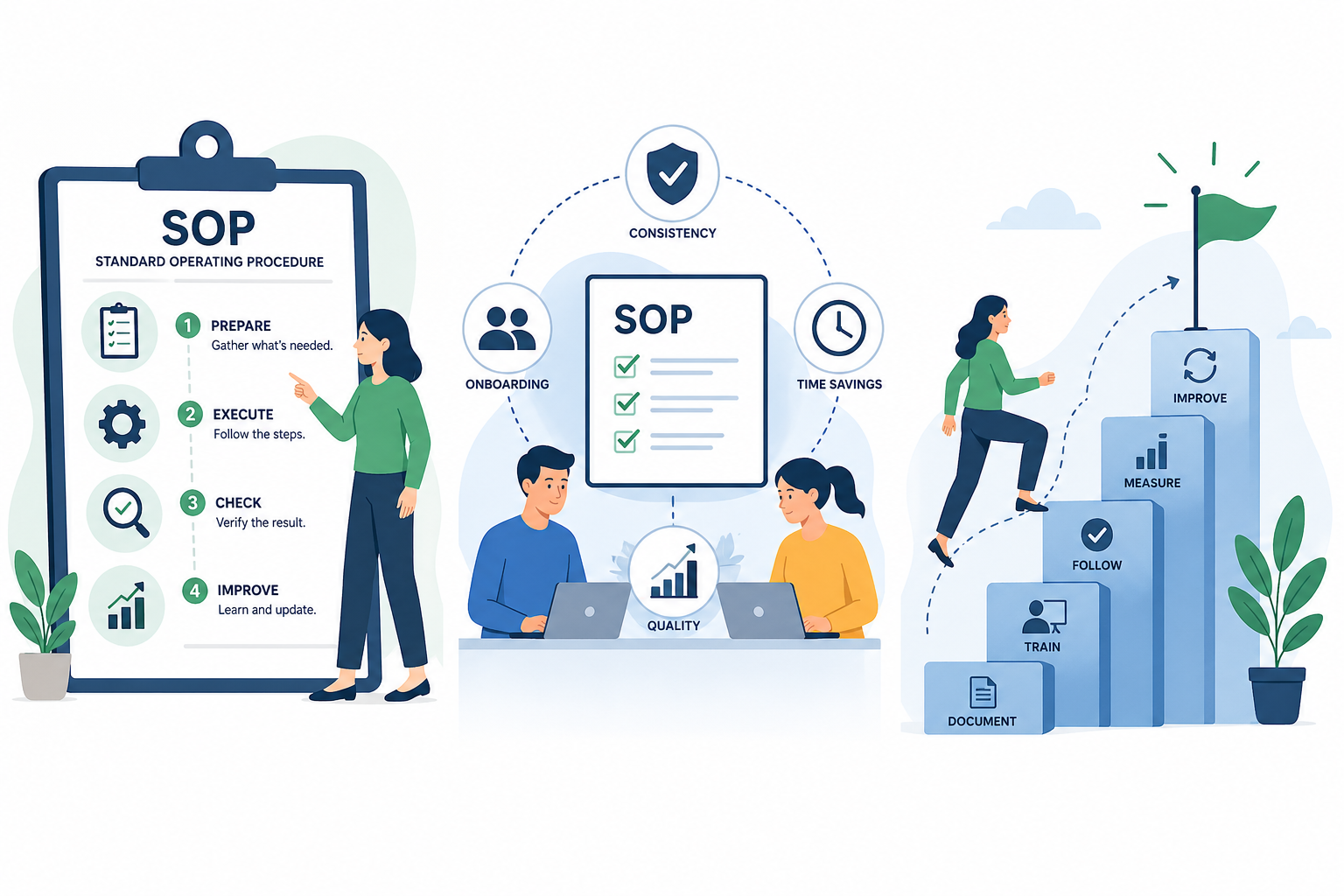
Why This SOP Template Works
A good SOP template isn’t just about documentation. It has to be usable.
This structure works because it:
- Keeps instructions clear and actionable
- Makes ownership visible
- Is easy to update over time
The best SOPs are the ones your team actually uses, not the ones that sit in a folder.
If you want help turning SOPs into routines your team actually follows, you can book a quick demo of Todolo.
Why SOPs Matter: Consistency, Safety, and Compliance
Well-written SOPs deliver measurable benefits. Work gets standardised so quality and output stay consistent no matter who does the task. Safety and compliance steps are spelled out, which cuts risk and matters especially in regulated environments. New hires have one place to look, so training time drops. When experienced staff leave, the knowledge stays. And when auditors or regulators ask how you do things, you have clear evidence to show them.
For these reasons, knowing how to create an SOP (and how to write one that people actually use) is a core skill for operations and quality teams.
SOP Format: What a Standard Structure Looks Like
A strong SOP format follows a clear structure so that any reader can quickly find purpose, scope, and steps. There is no single mandatory SOP format, but most effective SOPs include these sections:
1. Title and document control
- Title: Clear, specific name of the procedure (e.g. "SOP: Handwashing and Sanitisation for Food Handling").
- Document ID and version so you can track revisions.
2. Purpose and scope
- Purpose: Why the procedure exists and what outcome it supports.
- Scope: Where it applies (which sites, roles, or situations) and any limits.
3. Definitions and references
- Definitions: Any terms or abbreviations that might be unclear.
- References: Links to policies, regulations, or other SOPs.
4. Roles and responsibilities
- Who is responsible for performing, checking, and approving the procedure.
5. Prerequisites
- Training, equipment, materials, or conditions that must be in place before starting.
6. Step-by-step procedure
- Numbered steps in the order they must be performed.
- One action per step, in plain language.
- Warnings or safety notes where relevant.
7. Handling deviations and exceptions
- What to do if something goes wrong or doesn’t match the normal situation.
8. Revision history
- Who changed what and when, so the SOP remains a reliable record.
This SOP format works for both simple and complex procedures. You can shorten or expand sections depending on the task and your audience.
What Makes SOPs Effective in 2026?
Most SOPs fail not because they’re wrong, but because they’re not used.
SOPs have changed a lot in recent years.
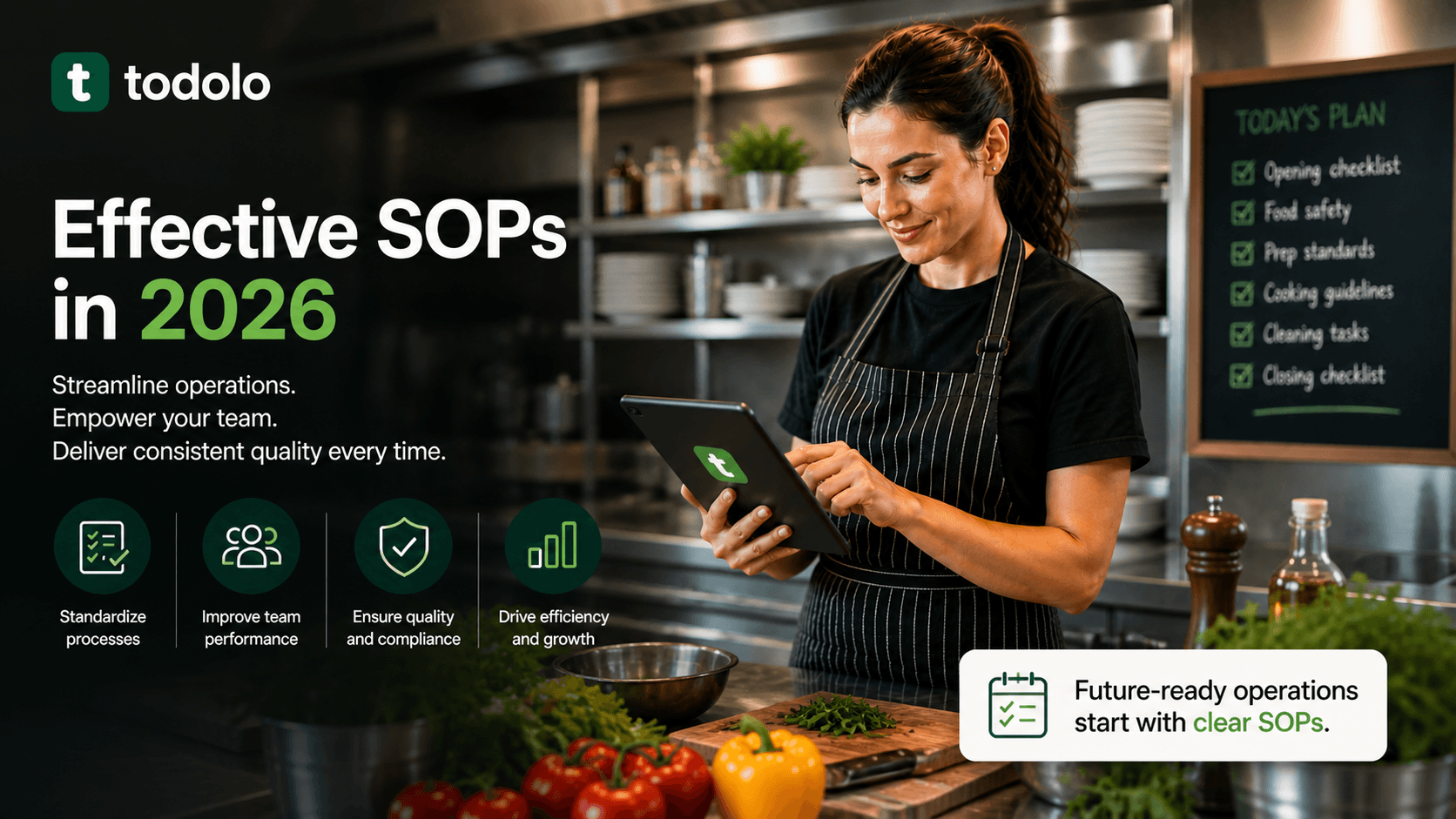
In the past, they were often static documents that were created once and rarely updated. Today, the most effective SOPs are dynamic, accessible, and built for real execution.
From Static Documents to Living Workflows
Traditional SOPs were stored in documents that quickly became outdated.
In 2026, SOPs are:
- Continuously updated
- Easy to access during work
- Integrated into daily tools
Instead of being something you read once, SOPs are now something you actively use.
Built for Execution, Not Just Documentation
The biggest shift is how SOPs are used.
Modern SOPs are designed to:
- Guide actions step-by-step
- Reduce decision fatigue
- Ensure consistency across teams
This means they are:
- Shorter
- More actionable
- Easier to follow
Why Modern Teams Rely on Better SOPs
Teams that use well-structured SOPs in 2026 benefit from:
- Faster onboarding of new employees
- Fewer errors in daily operations
- More scalable processes
Instead of relying on memory or informal knowledge, teams rely on clear systems.
The Key Difference Between Good and Great SOPs
The difference isn’t whether you have SOPs. It’s how they are used.
Good SOPs:
- Exist as documentation
Great SOPs:
- Are actively used in workflows
- Are regularly updated
- Help teams move faster with fewer mistakes
In 2026, the focus is no longer on writing SOPs. It’s on making them work.
How to Write an SOP: Step-by-Step Guide
How do I write an SOP? Follow this practical process so your procedure is clear, accurate, and usable.
Step 1: Choose the right process and define the goal
Pick one process that would benefit from a written procedure. Good candidates are ones you repeat often, that carry risk, or that you need for compliance. Define the goal: what should happen when the SOP is followed correctly? That keeps the scope tight and avoids vague or overlapping documents.
Step 2: Gather information and involve the right people
Observe the process as it’s done today and talk to the people who actually perform it. They know the real sequence, the pitfalls, and the shortcuts. If the procedure touches regulated or high-risk areas, get input from quality, safety, or compliance. Building on real practice improves accuracy and buy-in, and it supports the kind of experience and expertise that auditors and customers look for.
Step 3: Map the process and list all steps
Write down every step in order, including preparation and cleanup. Don’t skip "obvious" steps; what’s obvious to you may not be to a new hire. Use a simple flowchart or bullet list first, then turn it into numbered instructions. This is the backbone of your SOP example content.
Step 4: Write in clear, active language
Use short sentences and active voice ("Close the valve" not "The valve should be closed"). Avoid jargon unless you define it. One action per step makes the SOP easy to follow and easier to audit. If your organization uses a specific SOP format or template, align your wording with that style.
Step 5: Add safety, compliance, and quality checkpoints
Where relevant, insert warnings, required checks (e.g. temperature, time, sign-off), and what to do if a step cannot be completed. This turns your SOP into a reliable tool for both daily work and compliance.
Step 6: Review, test, and revise
Have someone who didn’t write it (ideally someone who will use it) follow the SOP and note anything unclear or missing. Update the draft, then get formal review and approval from the right people (e.g. process owner, quality, safety). Document the version and approval date.
Step 7: Publish, train, and maintain
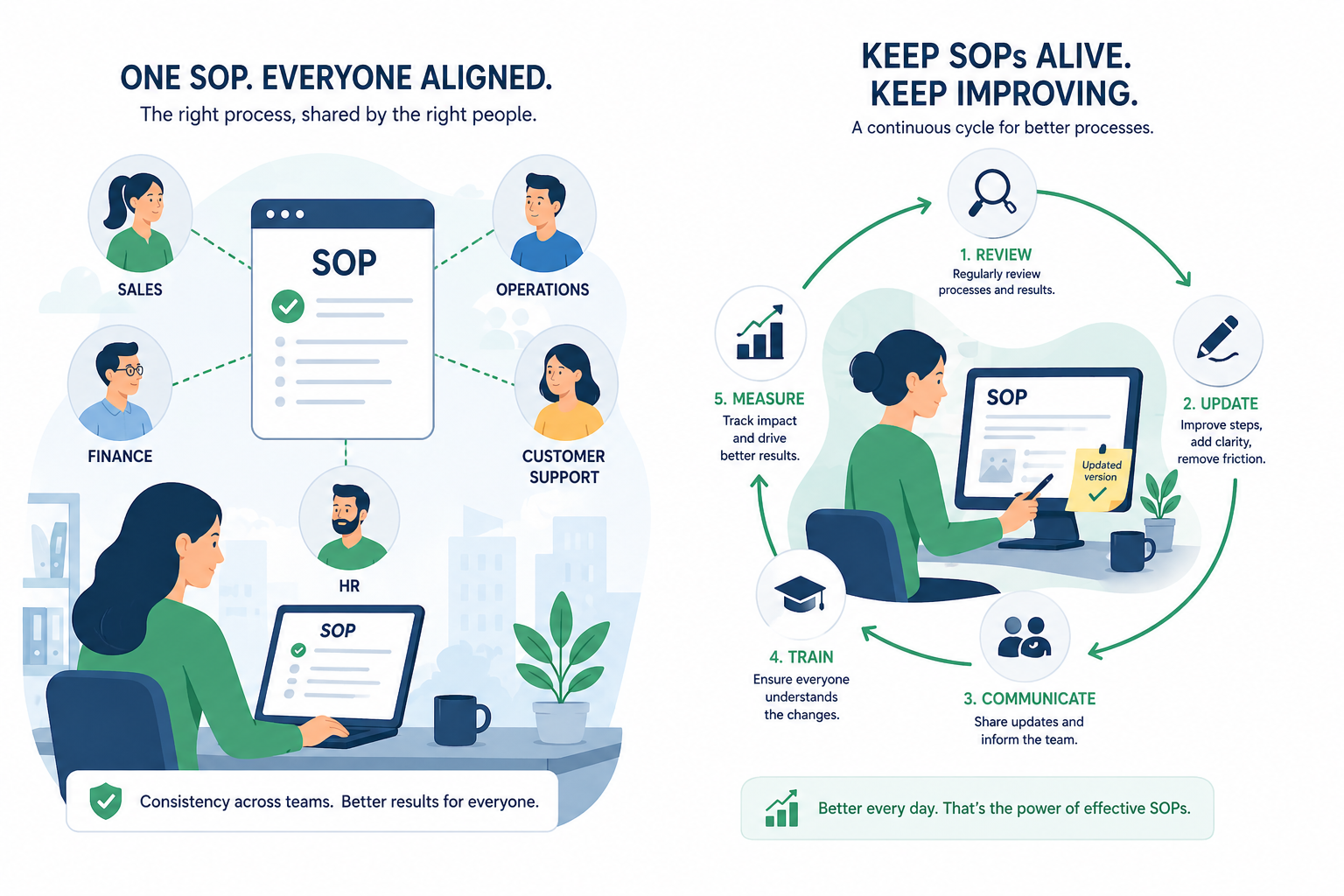
Publish the SOP in a place where the right people can access it (e.g. intranet, document system, or operations platform like Todolo). Train or brief the team on the new or updated procedure, and set a review date so the SOP stays current when processes or regulations change.
Frequently Asked Questions (FAQ)
What is an SOP?
An SOP (Standard Operating Procedure) is a written, step-by-step guide that explains how to perform a specific task or process in a consistent, safe, and compliant way. Organizations use SOPs to standardize work, reduce errors, support training, and meet quality or regulatory requirements.
What does SOP stand for?
SOP stands for Standard Operating Procedure. It is a formal document that describes the correct way to carry out a defined process so that results are consistent and repeatable across people, shifts, and locations.
How do I write an SOP?
To write an SOP, define the process and its goal, gather input from people who do the work, list every step in order, and write clear instructions in active voice. Add safety and compliance notes where needed, then review, test with a user, get approval, and publish. Set a review date to keep the SOP current.
What should an SOP include?
A good SOP includes a title and version, purpose and scope, definitions, roles and responsibilities, prerequisites (training, equipment), numbered step-by-step instructions, handling of deviations, and revision history. The exact SOP format can be adapted to your organisation’s needs.
How long should an SOP be?
An SOP should be as long as it takes to cover the process clearly and safely. Often that’s one to a few pages. Use short sentences, one action per step, and visuals (e.g. tables, diagrams) to keep it readable. Skip unnecessary detail that obscures the main steps.
How often should SOPs be reviewed?
SOPs should be reviewed on a set schedule (e.g. annually) and whenever the process, equipment, regulations, or roles change. Document each review and update in the revision history so the SOP remains a reliable, up-to-date reference.
Bring Your SOPs to Life with the Right Tools
Knowing what an SOP is and how to write one is only the start. The real impact comes when your procedures are easy to find, easy to follow, and kept up to date. Put SOPs in one place, link them to training and daily tasks, and update them when processes change. That’s when teams start performing consistently and quality and compliance become easier to maintain.
Todolo brings documentation, checklists, and training into one platform so your SOPs are part of everyday operations instead of static files that sit unused. You can store and version procedures, assign related tasks, and keep everyone aligned with the latest way of working.